
Cohort studies – What are they and how do we use them in NEMESIS?
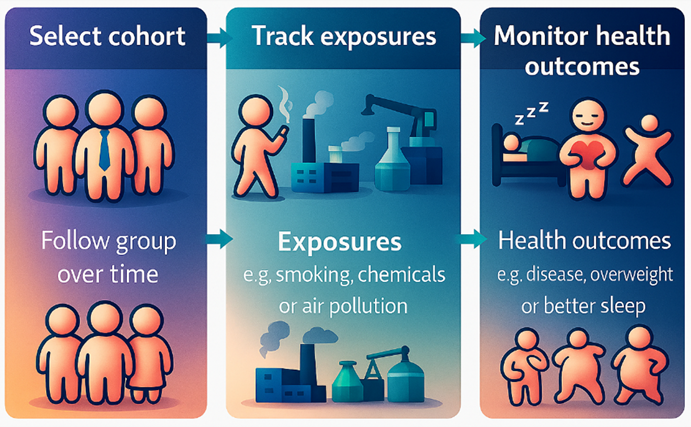
A cohort is a group of individuals sharing a common trait or experience, such as birth, during a specific time period. This group/cohort can be used within research in observational studies. They can be studied retrospectively (backwards in time) or prospectively (forward in time) depending on whether the health outcome of interest has occurred or not at the start of the study.
A cohort study is a study design in which a selected group of people, the cohort, is observed and followed over a specific period. Cohort studies are used to study associations, such as incidence, cause and prognosis, between different exposures and health outcomes. An exposure might be an environmental factor, e.g. chemicals in our environment, or a behavioral factor or habit like smoking. Outcomes are often related to health and can include disease or medical condition such as being overweight.
The NorthPop cohort – One of several cohorts in the NEMESIS research
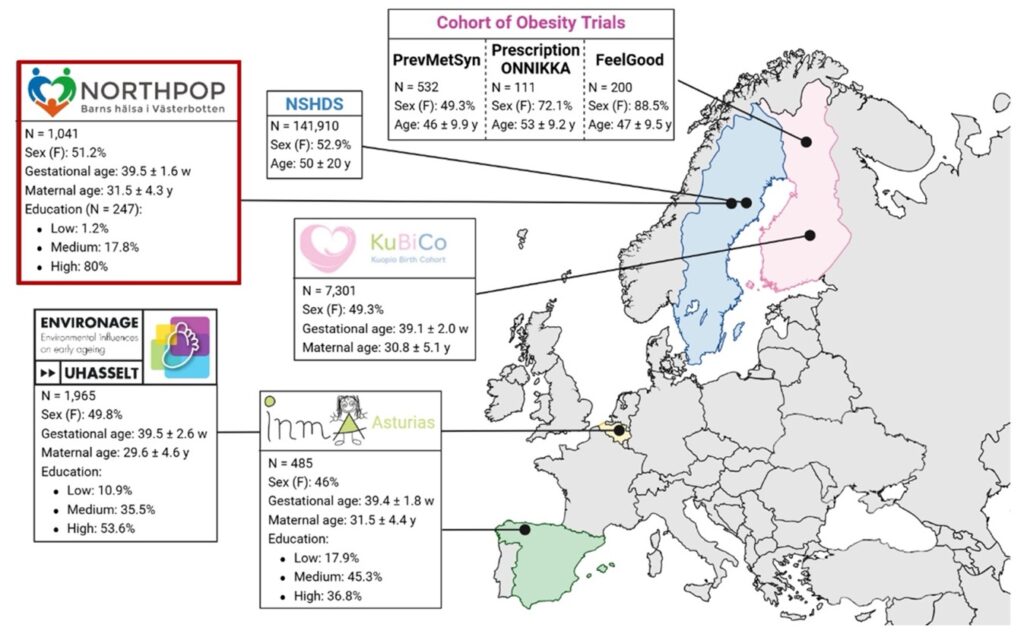
Within NEMESIS, multiple cohorts are included from several European countries (see figure below). The NorthPop cohort consists of 10 000 families from northern Sweden, and data from approximately 1000 children are included in NEMESIS. The NorthPop families are followed from pregnancy and up until the child is 15 years old. During these years the cohort collects biological samples from both mother and the children, for example blood, feces, saliva and placental tissue. The parents also answer detailed questions about their lifestyle during pregnancy, the child’s home environment and the child’s early habits. This kind of data is crucial for all the projects that will use data from the NorthPop cohort in the future. Within the NEMESIS project, endocrine disruptive chemicals will be studied in relation to outcomes in the children.
Meet Linnea, a midwife working at Umeå University Hospital – Delivering babies and contributing to the research environment
I got a chance to interview one of the midwives, Linnea, who works at the maternity ward at the University Hospital of Umeå, NUS. Linnea meets NorthPop families when it’s time to give birth.
“Even though the families have already been recruited to the project during the pregnancy, we always start by asking and doublechecking if the families still want to be part of the NorthPop project”, Linnea says.
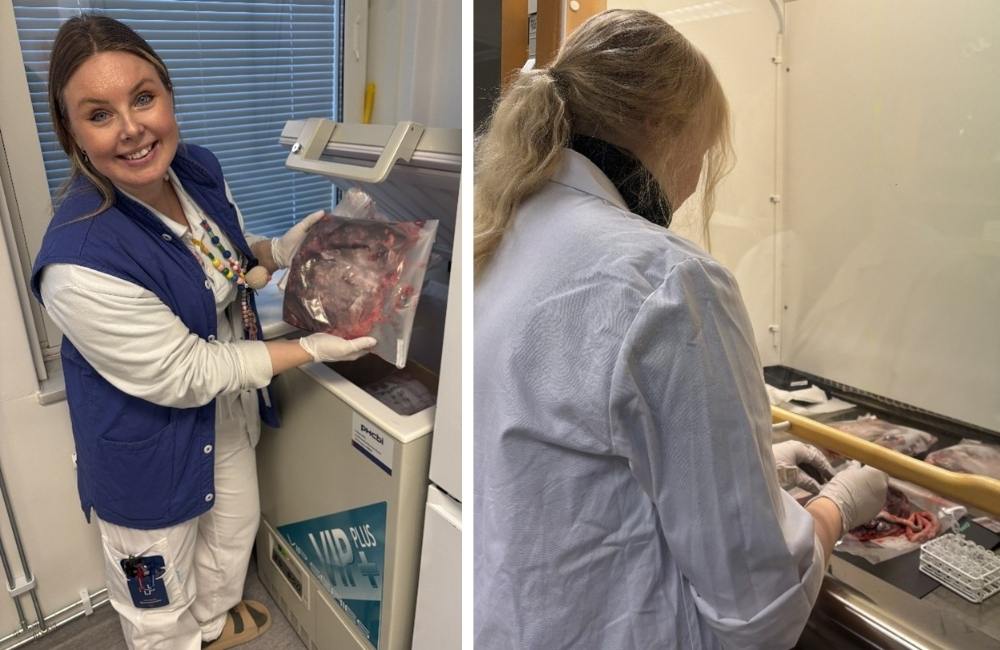
The first samples from the baby are taken in the delivery room. “We take a blood sample from the umbilical cord and also collect the placenta”. The placentas will be deep frozen directly after the delivery.
After the delivery the family will receive a bag from NorthPop with instructions and an equipment kit for other samples. “The newborn baby will also leave a saliva sample and a sample of their first feces, which usually happens during their stay at the maternity ward”, Linnea says.
According to Linnea, the families seem to be positive about being a part of the NorthPop project, even though she only meets the families during their visit at the maternity ward in the beginning of their NorthPop project participation.
Linnea thinks that being a midwife is the best job in the world. “It is a great pleasure to get to be a part of life-changing events for the families. The best thing in my job is to be with the family during the labor and delivery and to get to give the baby to their mother’s arms for the first time and see the happiness”, she says.
The NorthPop project recently reached their goal of recruiting 10 000 families. These families will now be followed for a long period of time, opening opportunities for several future research projects using the NorthPop infrastructure. Outcomes that will be studied within NorthPop are for example cognition, overweight and allergies. This cohort will generate results within both NEMESIS and other research projects.
Tytti Emilia Tuominen
PhD student
Research group of Marie-Therese Vinnars
Umeå University